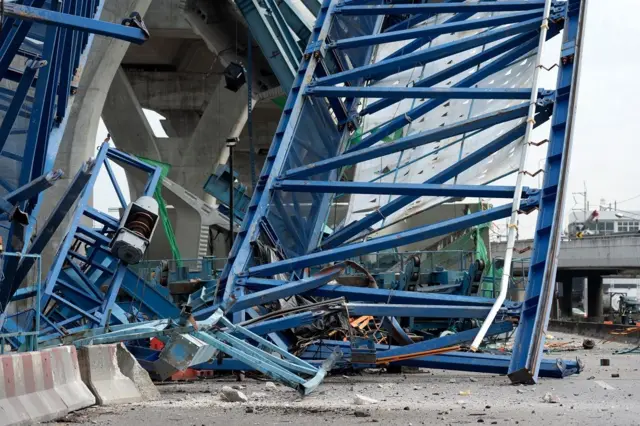
Why Thailand repeatedly has serious accident on construction sites of public utility?
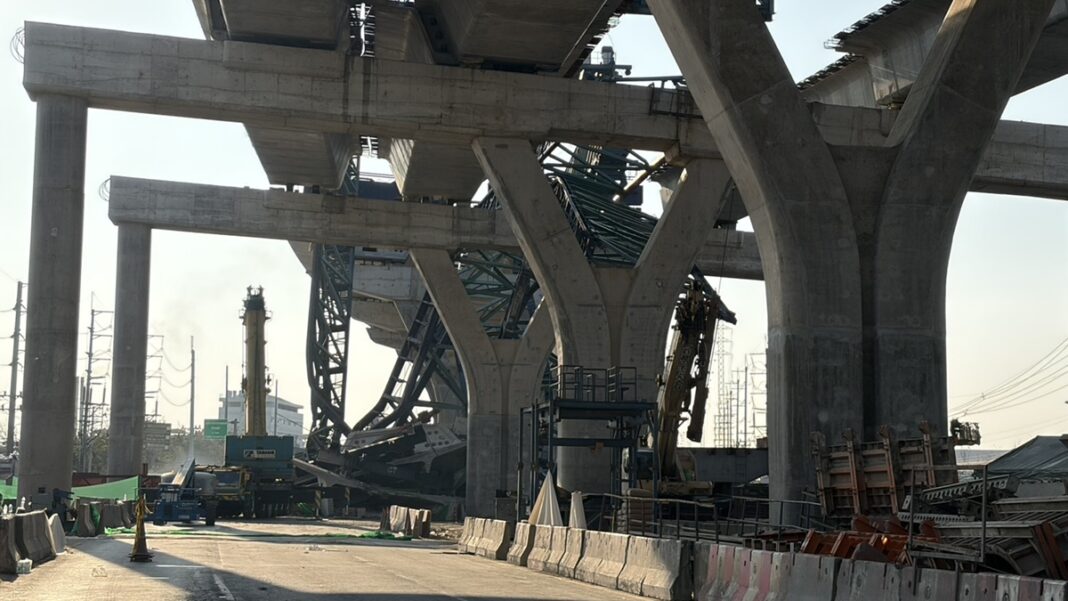
Safety standards in Thailand’s construction industry often lag behind some regional counterparts like Singapore and Malaysia due to a combination of factors, including weak enforcement of existing regulations, a shortage of qualified labor, and a general lack of safety awareness and corporate responsibility.
Key contributing factors include:
Weak Enforcement of Regulations: Thailand has relevant safety laws, such as the Occupational Safety, Health, and Work Environment Act 2011, but enforcement mechanisms often fail to keep pace with the high volume of construction activities. Unlike Singapore, which has a high ratio of OSH inspectors to workers, Thailand struggles with a lack of staff and resources for effective oversight.
When asked why Thailand has such a weak enforcement of Regulations?
Key reasons for this weak enforcement include:
Lack of Political and Institutional Will: Despite having laws like the Public Procurement and Supplies Administration Act 2017, which allows for blacklisting negligent contractors, government agencies have historically failed to utilize these powers.
Conflicts of Interest: There is a notable shortage of independent safety assessors. Performance reports often fail to reflect reality because assessors may have conflicts of interest with the contractors they are evaluating.
Systemic Corruption: Investigative reports indicate that corruption is often embedded in the bureaucratic and policy-making processes. This allows offenders to escape punishment and erodes public trust in the legal system.
“Paper Tiger” Penalties: Current punishments are frequently limited to brief work suspensions or minor fines that are negligible compared to multi-billion baht project values, failing to act as a deterrent for large firms.
Diluted Oversight via Subcontracting: Large firms often delegate labor to multiple layers of smaller subcontractors, which dilutes safety communication and makes it difficult for authorities to maintain consistent oversight.
Fragmented Responsibility: Thailand lacks a central lead agency with clear authority over safety for major infrastructure projects, leading to a lack of integration in safety policies among various stakeholders
Lack of Skilled Labor and Training: Many construction workers in Thailand receive on-the-job training rather than formal safety education programs. This lack of proper training contributes to unsafe acts and a higher incidence of accidents.
Cultural and Social Factors: There can be a lack of awareness and a culture where safety is compromised for speed and cost savings, with some companies opting for low-quality materials and cutting corners. This issue is exacerbated by a general public and political apathy toward making tangible improvements a national priority until major accidents occur.
Ineffective Law Enforcement: The justice system has been criticized for slow resolution of construction disputes and perceived susceptibility to influence, meaning that law offenders, especially those with wealth or connections, may not always face appropriate punishment. This encourages a disregard for laws and regulations.
Poor Working Conditions: Long working hours and inadequate rest breaks, often linked to low wages, lead to worker fatigue and increased accident risks.
Lack of Transparent Reporting: There is a general issue with accurate data collection and reporting of occupational injuries and fatalities, making it difficult to get a complete picture of the safety situation and implement targeted improvements.
In contrast, countries like Singapore and Malaysia have more developed legal frameworks and more robust enforcement mechanisms, leading to generally lower accident rates, particularly in Singapore.
Well, that is it. Thailand only.