
I have been working with MDs most of the times, they are Expat. Here is my diagnosis for you why many Managing Directors I know failed their roles to make workplace safety “almost real”.
EXPAT -Expatriate Managing Directors (MDs) of multinational corporations in Thailand that I worked with often find themselves “trapped” between global head-office expectations and the local reality of the Thai business ecosystem. Despite their personal professional standards, they often fail to implement safety policies due to the following structural and cultural pressures:
- The “Dual Management” Trap
Expat MDs often rely heavily on a circle of long-serving Thai senior managers to navigate local bureaucracy, labor relations, and “informal” government interactions.
The “Filter” Effect: Local managers may shield the MD from the reality of site-level negligence or “negotiated” safety shortcuts to avoid “disturbing” the MD or causing a “loss of face.”
Selective Reporting: The MD may only see sanitized safety reports and “check-box” audits, while the actual site operations follow informal local norms that bypass the MD’s global directives. - Adaptation to “Local Pragmatism”
Over time, many expat MDs undergo a process of “localized normalization.” To meet aggressive growth targets in the competitive Thai market, they may begin to accept local workarounds as “pragmatic” solutions.
Cost Pressures: If an MD insists on 100% safety compliance that increases project costs by 20%, they may lose bids to competitors who utilize “local methods.”
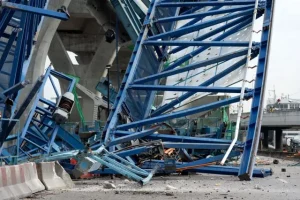
Speed Over Safety: In 2025–2026, the Thai government’s push for rapid infrastructure (like the Rama 2 and High-Speed Rail projects) placed immense pressure on MDs to deliver ahead of schedule, leading them to look the other way when safety corners were cut. - Lack of True Site-Level Authority
While an MD has authority in the boardroom, they often lack influence over the informal hierarchy of subcontractors and “site bosses” who actually manage the laborers.
The Subcontractor Barrier: The MD’s safety policies apply to their direct employees, but 80–90% of the risk is held by 3rd-tier subcontractors. The MD has little visibility into these smaller firms, which often lack the equipment or training to follow the “expensive” safety manuals provided by the corporate office. - Fear of Disrupting “Networked” Relationships
In Thailand, business success is often tied to “Barami” (influence/prestige) and relationships with elite local partners or state agencies.
Political Sensitivity: An MD who pushes too hard on safety issues—such as reporting a partner firm for illegal wastewater discharge or substandard steel—risks alienating powerful local stakeholders.
Self-Preservation: Challenging the “status quo” of corruption or negligence can lead to bureaucratic “headaches” (visa issues, tax audits, or stalled permits), leading MDs to adopt a “don’t rock the boat” mentality. - Short Tenure and “Legacy” Focus
Most expat MDs are on 3-to-5-year assignments.
The Incentive Structure: Their performance is often judged by financial KPIs and project completion dates within their specific tenure.
Passing the Buck: Since systemic safety or environmental failures (like toxic waste accumulation or structural fatigue) often take years to manifest, an MD may prioritize short-term profitability, leaving the long-term “safety debt” to their successor. - Legal and Language Insularity
The MD often operates in an “English-language bubble.”
Regulatory Blindness: Local laws, such as the Building Control Act or the Public Health Act, are complex and often modified by “ministerial regulations” written only in Thai.
Reliance on Legal Counsel: If the company’s local legal advisors prioritize “finding a way around the law” rather than “strict compliance,” the MD may inadvertently authorize practices that violate safety standards.
Farewell!! All the best!!